
Understanding the Real Cost of a Washer Repair
When a washing machine stops working properly, repairing it may seem like the obvious choice. However, the cost of parts, labor, service calls, and future repairs can quickly make an older appliance less economical. A repair that appears affordable at first may become expensive when additional worn components are discovered during service. The age and overall condition of the washer are also important factors when deciding whether to repair or replace it. If the machine has already required several repairs, another service bill may not provide good long term value. Understanding the complete financial picture can help you make a more practical decision for your household.
Consider the Age of Your Washer
The age of a washing machine is one of the first things to consider before spending money on repairs. Older washers naturally experience more wear because their motors, pumps, belts, bearings, seals, and electronic components have already endured years of use. A relatively inexpensive repair can make sense when the washer is otherwise in excellent condition and has many useful years remaining. However, repairing a machine near the end of its expected service life can mean paying for a temporary solution. Once one aging component is replaced, another component may fail soon afterward. For this reason, the washer’s age should always be considered alongside the estimated repair cost.
Compare Repair Costs With Replacement Costs
A useful way to evaluate the decision is to compare the complete repair expense with the price of another reliable washer. Repair costs can include the technician’s visit, labor, replacement parts, transportation, and any additional service charges. Buying a new washer may offer longer expected use, but it also requires a larger upfront investment. A quality used washer can provide another option for homeowners who want to control their spending without paying full retail price. When the repair approaches a significant portion of the cost of a dependable replacement, purchasing another machine may become financially attractive. The key is to compare total value rather than focusing only on the immediate repair bill.
When a Used Washer Can Be the Better Choice
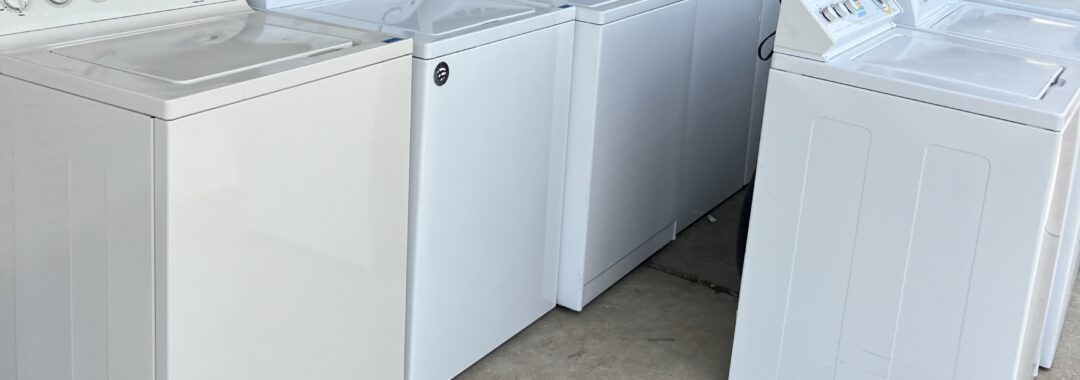
A used washer can make financial sense when your current machine requires an expensive repair and has already experienced several problems. Purchasing a properly inspected used appliance can provide useful functionality at a considerably lower upfront cost than buying a brand new model. This option can be especially practical for renters, first time homeowners, students, families managing a tight budget, or anyone furnishing a property. A used washer may also allow you to choose a better quality model than you could afford when shopping exclusively among new entry level machines. However, condition matters greatly, so buyers should focus on appliances that have been tested and evaluated before purchase. At ABC Appliances, we help customers consider practical used appliance options when replacing an unreliable washer makes more financial sense than continuing to repair it.
Look Beyond the Immediate Problem
A washer may have one obvious problem, but that does not necessarily mean it is the only component nearing failure. Strange noises, excessive vibration, leaking water, slow draining, inconsistent spinning, and repeated error codes can indicate broader mechanical or electrical wear. If several symptoms are appearing at the same time, spending money on a single repair may only postpone another service requirement. A professional evaluation can help determine whether the problem is isolated or connected to general deterioration. The more extensive the underlying wear, the more carefully you should consider putting repair money toward another appliance. Looking beyond the immediate malfunction can prevent repeated expenses that gradually exceed the value of the machine.
Calculate the Cost Per Year of Continued Use
Another useful approach is to estimate how much you are paying for each additional year of washer use. Suppose a repair costs several hundred dollars but only extends the appliance’s practical life for a short period. In that situation, the repair may not offer the same value as purchasing a reliable used washer that could provide several more years of service. Consider the repair cost, expected remaining lifespan, previous maintenance expenses, and likely future problems before making a decision. This calculation does not need to be complicated because even a basic comparison can reveal which option provides better value. A lower upfront price is not always the cheapest choice if the appliance continues requiring repairs. Looking at cost over time provides a clearer picture of the financial decision.
Previous Repairs Should Influence Your Decision
Your washer’s repair history can reveal whether another repair is likely to be worthwhile. If you have already replaced the drain pump, belt, motor components, control board, or other major parts, the machine may be entering a more expensive stage of ownership. Repeated service calls can also become frustrating because each repair creates another expense without necessarily improving the appliance’s overall reliability. One isolated repair does not automatically mean that replacement is necessary. Several significant repairs within a relatively short period, however, should encourage you to compare replacement options carefully. Keeping records of previous repairs can make this comparison much easier. When the accumulated repair costs become substantial, investing in a dependable used washer may provide better financial value.
Consider Energy and Water Efficiency
Older washing machines may also cost more to operate than newer and more efficient models. Improvements in appliance technology can reduce water consumption, electricity use, and operating expenses over time. If your current washer is old and inefficient, continuing to repair it may preserve an appliance that costs more to operate every month. A more efficient used model in good condition can sometimes provide a practical middle ground between repairing an aging machine and purchasing an expensive new appliance. The potential savings will depend on the washer model, household usage, utility rates, and condition of the replacement appliance. These operating costs should therefore be included when comparing repair and replacement decisions.
Do Not Judge a Used Washer by Appearance Alone
A used washer that looks clean is not necessarily a washer that is mechanically reliable. Internal components can experience significant wear even when the exterior appears almost new. Buyers should pay attention to the washer’s operating performance, spin cycle, drainage, water filling, unusual noises, vibration, and overall condition. It is also important to ask about testing, inspection, previous use, and any available warranty or service support. A properly evaluated used appliance can offer much better value than an inexpensive machine with unknown problems. Taking time to evaluate condition can reduce the financial risk associated with buying a used washer.
When Repairing Still Makes More Sense
Repairing your existing washer can still be the smarter financial decision when the machine is relatively new and the problem is minor. A replacement of a worn hose, small switch, belt, or other inexpensive component may restore reliable operation without requiring a major investment. Repair can also make sense when the washer has been well maintained and has a strong service history. If the appliance is a higher quality model with many useful years remaining, replacing it because of one manageable problem may waste money. The important point is to distinguish between an isolated failure and a pattern of increasing maintenance requirements. When repair costs remain reasonable compared with the washer’s remaining useful life, keeping the existing appliance may be the better choice.
How to Make a Smarter Financial Decision
Before deciding, obtain a clear estimate of the repair and ask what caused the problem. Determine whether the technician expects other major components to require attention based on the washer’s age and condition. Then compare that information with the purchase price, condition, expected lifespan, operating costs, and potential service support of a used replacement. You should also consider delivery, installation, removal of the old appliance, and any warranty offered with the replacement. Taking all these costs into account provides a much more accurate comparison than looking at the repair invoice alone. A financially sensible decision is ultimately the one that gives your household dependable washing performance for the lowest reasonable long term cost.
Why Used Appliances Can Offer Strong Value
Buying used does not necessarily mean sacrificing quality or reliability. Many washers are replaced for reasons unrelated to major mechanical failure, such as remodeling, moving, upgrading, or changing household needs. This creates opportunities for buyers to find functional appliances at prices substantially below those of comparable new models. The important factor is selecting a washer that has been properly checked and is suitable for your household’s needs. At ABC Appliances, we focus on helping customers find practical appliance solutions that balance price, condition, functionality, and expected value. This approach can make a used washer an attractive alternative when repairing an aging appliance no longer makes financial sense.
The Bottom Line
There is no single repair price that automatically means a washer should be replaced because every appliance has a different age, condition, repair history, and expected lifespan. The strongest replacement candidates are usually older machines with repeated failures, expensive repairs, poor efficiency, or multiple signs of mechanical wear. A dependable used washer can provide an affordable alternative when the cost of keeping an aging appliance running continues to rise. Repairing remains worthwhile when the washer is relatively young, well maintained, and experiencing one isolated problem with a reasonable repair cost. By comparing immediate expenses with long term reliability and operating costs, you can make a decision based on value rather than convenience. ABC Appliances can be part of that evaluation by providing used appliance options for households looking for practical alternatives to expensive washer repairs.